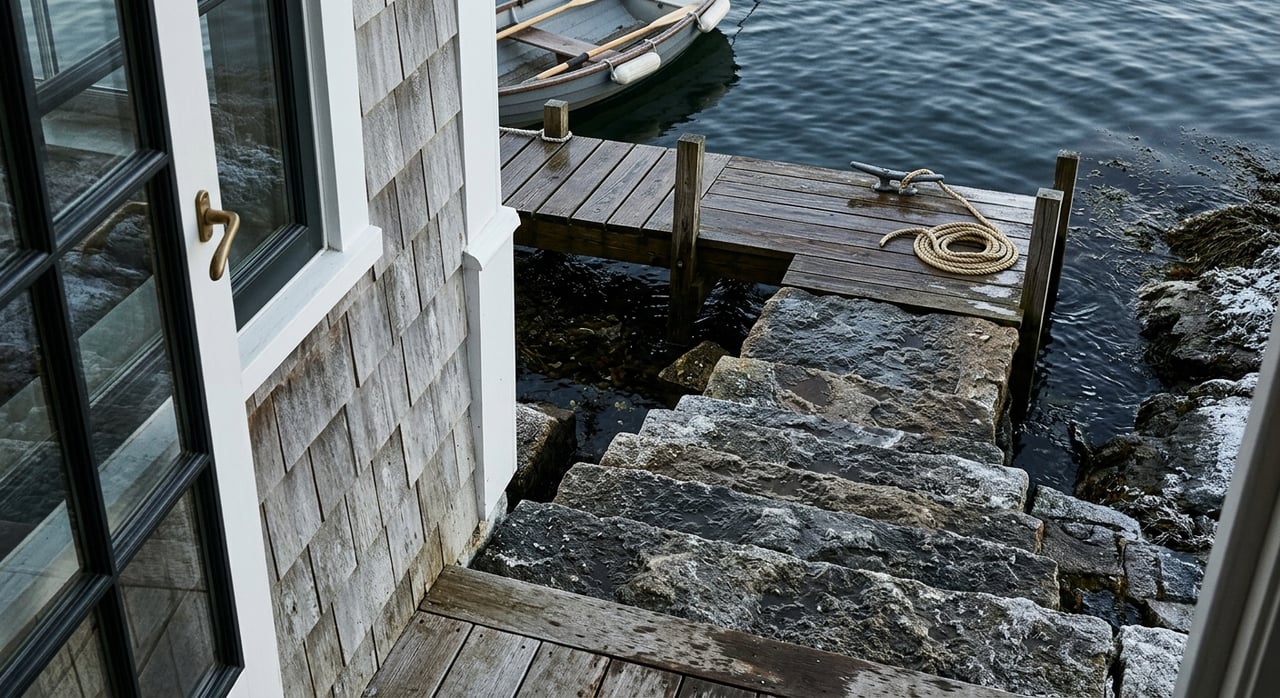
Seasonal And Year-Round Living On Southport Island
May 7, 2026
May 7, 2026
Are you wondering whether Southport Island is best enjoyed as a summer escape or as a full-time home? That is a smart question, especially in a coastal town where seasonal living shapes so much of the local rhythm. If you are thinking about buying, selling, or relocating here, it helps to understand how Southport works in both peak season and the quieter months. Let’s dive in.
Southport is a small island town in Lincoln County, with most residents living on the main island. The town includes the villages of Southport, West Southport, Cape Newagen, and Squirrel Island. From the start, it helps to think of Southport as a place with both a distinct town identity and close ties to the wider Boothbay Region.
The biggest fact to know is that seasonal housing plays a major role here. Lincoln County’s housing needs assessment says that 65% of Southport’s housing stock is seasonal, compared with 29% countywide and 17% statewide. The current ACS profile also shows 989 housing units and 302 households, which supports the picture of a town with far more homes than full-time households.
For you as a buyer or seller, that matters because Southport does not function like a typical year-round inland market. Housing patterns, island routines, and even some local services reflect the fact that many owners use their homes part time. In practical terms, Southport is built to serve both summer residents and full-time households.
If you are looking for a second home, Southport offers a setting that feels closely tied to the coast. The town’s public-facing identity leans into waterfront work, boating, lobstering, and ocean scenery. That coastal character is not just visual. It also shapes how people use homes and property across the year.
One useful local example is broadband. Southport’s municipal broadband page offers both year-round and seasonal service, and the seasonal plan is billed annually for May 1 through November 1. That is a small but meaningful sign that local systems are designed with part-time occupancy in mind.
Seasonal ownership on Southport often means planning beyond summer enjoyment. The county housing assessment notes that homes closer to the ocean are more likely to be seasonal, and seasonal units are concentrated along the coast. For many near-water or waterfront owners, that can mean more deliberate off-season upkeep, check-ins, and coordination.
If Southport is on your list for a second home or retirement retreat, it helps to ask practical questions early:
These questions can shape what kind of home feels like the right fit, especially on an island where coastal exposure and seasonal use are common.
Southport may be highly seasonal, but it is not just a summer place. One of the clearest takeaways from the town’s own information is that there is a strong base of year-round civic life. Local and regional services help support full-time residents in a way that many buyers may not expect from a small island town.
Southport’s directory includes the town office, Southport Central School, Southport Memorial Library, Boothbay Region Water District, St. Andrews Urgent Care Center, the Lincoln County Sheriff, the U.S. Coast Guard, and the U.S. Post Office. The town also points residents toward regional partners in the Boothbay Region for services such as health care, community support, refuse, and water.
That combination is important. It shows that while Southport has a small-town island feel, daily life is supported by both local institutions and nearby regional connections. If you plan to live here full time, that network is part of what makes the town workable.
Year-round living is about more than utilities and roads. It is also about whether a place has dependable gathering points and a sense of continuity when the pace changes with the seasons.
Southport Town Hall is one of those anchors. The town says it was built in 1866, has hosted town meeting since 1868, and is also used for concerts, weddings, socials, and other gatherings. Spaces like that matter because they help create a shared rhythm for full-time residents.
Southport Central School is another important part of that fabric. The school describes itself as the heart of a small island community, and the AOS 98 district also includes Boothbay Region Elementary School and Boothbay Region High School. That reinforces Southport’s connection to a broader regional school system while keeping a local school presence on the island.
Living on Southport full time can be rewarding, but it also asks for some planning. Island life often means paying closer attention to timing, access, and local schedules than you might in a larger mainland town.
For example, the town office keeps limited public hours. It is open Monday through Thursday from 8:00 a.m. to 12:30 p.m., plus Monday evenings from 6:00 to 8:00 p.m. The town also advises anyone traveling from a distance to call first to make sure a transaction can be completed.
That does not make life difficult. It just means that routines may feel more intentional. If you are moving to Southport year-round, a practical mindset helps, especially when you are coordinating services, appointments, or seasonal maintenance.
One of the most important facts about Southport is that island access depends on a single bridge connection. MaineDOT describes the Southport Bridge as a moveable bridge carrying Route 27 over Townsend Gut at the Boothbay Harbor and Southport town line.
For everyday life, that means your connection to the mainland is straightforward, but concentrated through one route. Buyers who are considering full-time living often appreciate understanding that early, because access shapes commuting, errands, service calls, and day-to-day planning.
Whether you live on Southport full time or own a second home, maintenance is part of the ownership equation. Coastal conditions and seasonal occupancy can make planning more important than it might be in other areas.
Southport’s Public Works Department handles road maintenance, equipment maintenance, snow removal, town bridge upkeep, dock and float maintenance, and upkeep of public buildings and lands. The town also notes that Routes 27 and 238 are state roads, so while Southport handles snow removal, broader repair and maintenance for those corridors are not managed by the town.
For you, this means winter readiness is part of the local picture. Even if you are buying for summer use, it is wise to think through off-season care, access, and how much support you want in place when the home is not occupied.
Not every Midcoast town has the same balance between seasonal and year-round life. Southport sits on the more seasonal end of that spectrum.
The county housing assessment says Wiscasset has only 3% seasonal housing, while Southport is at 65%. It also groups Southport with South Bristol, Bremen, Boothbay Harbor, Bristol, and Monhegan as communities where seasonal housing makes up more than 40% of the stock.
That comparison helps explain Southport’s appeal. If you are drawn to a place with a pronounced second-home and coastal retreat identity, Southport fits that description more than many nearby towns. At the same time, its town services and Boothbay Region ties make full-time living more realistic than buyers sometimes assume.
The clearest way to think about Southport is this: it combines a strong seasonal-home identity with enough year-round institutions to support full-time living. That blend is what makes it distinctive.
If you want a classic Midcoast second-home experience, Southport offers a market where seasonal ownership is normal, expected, and built into local patterns. If you want to live here full time, you will likely value the town’s civic anchors, regional connections, and practical service network.
The right choice depends on how you want to use the property, how much planning you are comfortable with, and how closely you want your home life tied to the rhythms of the coast. A knowledgeable local guide can help you look beyond the view and focus on how a specific property will actually function for you across the full year.
If you are thinking about buying or selling on Southport Island, Marsha DeCosta offers calm, practical guidance backed by deep Midcoast knowledge and full-service transaction support.
Stay up to date on the latest real estate trends.



With a trusted network of industry experts—including photographers, stagers, lenders, inspectors, and title professionals—Marsha ensures every transaction is handled with precision and care from start to finish. Whether you’re buying your first home, searching for a coastal retreat, or ready to list your property, Marsha DeCosta is a REALTOR® who makes every client’s real estate experience seamless, informed, and rewarding.
Marsha DeCosta
[email protected]
(207) 380-9970
License #BR925618
152 Main Street Wiscasset ME 04578