
What Bristol Maine Shoreland Zoning Means for Buyers
August 27, 2026
August 27, 2026
Every summer, someone falls for a low-slung cottage at the water's edge in Round Pond or New Harbor and starts sketching additions before the ink dries on the offer. A primary suite off the back. A bigger septic field for guests. Maybe a second story to catch the sunrise over Muscongus Bay. Then they find out the structure sits inside Bristol's shoreland zone, and the rules that govern what can be built there care nothing about how much the buyer paid.
That gap between what a listing costs and what a buyer is legally permitted to do with it is the real story in Bristol right now. The town's median price tells you almost nothing useful, because Bristol isn't one market. It's four villages, Pemaquid, New Harbor, Chamberlain, and Round Pond, each stitched into a state and local zoning framework that regulates the dirt far more strictly than the market regulates the price.
In July 2026, Bristol homes were listed at a median price of $514,000 town-wide, according to aggregated MLS data. Recorded sales over the same period ran lower, with a median sale price of $440,000. The average sale price, though, was $817,626, a gap wide enough to tell you the median is being pulled by a small number of high-value waterfront transactions rather than reflecting a typical Bristol home.
Zoom into the shoreline and the number changes again. Active waterfront-specific listings in Bristol carried a median asking price near $650,000 in mid-2026, roughly $140,000 above the town-wide figure. Narrow further to the village of Pemaquid alone and July 2026 median list prices topped $1.3 million. Move a few miles down the peninsula to South Bristol, a separate town with its own shoreland ordinance, and the median sale price was $1,125,000, up 45 percent year over year, on just 11 recorded sales in the trailing twelve months.
That last figure is worth sitting with. A median built from 11 transactions swings hard with every closing. It's not a trend line, it's a small sample doing what small samples do. The same caution applies to Bristol's own year-over-year comparisons: with roughly 34 recorded sales across the entire town in a year, one estate sale or one distressed listing can move the median by tens of thousands of dollars. A buyer using any single number from any single month to size up the market is reading noise as signal.
The more useful question isn't what the median says. It's which zoning district a specific parcel sits in, because that answers what the property can become, not just what it costs today.
Maine's Mandatory Shoreland Zoning Act requires every municipality to regulate land within 250 feet of the high-water line of coastal wetlands, tidal waters, and larger ponds and rivers, and within 75 feet of certain streams. Bristol adopted its own ordinance to implement that law, most recently amended in March 2024, and it divides the shoreland zone into distinct districts: Village, Residential, Resource Protection, and Public Recreation.
The Public Recreation district isn't abstract. It's mapped to specific public parcels, including Colonial Pemaquid's Restoration Park and Fort, Pemaquid Beach Park, and Pemaquid Point Lighthouse Park. If a buyer's target property abuts one of these, the adjacent land use rules and permitted activities differ from a purely residential lot down the road, which matters for anything from dock placement to future subdivision.
Bristol's own permit application spells out the baseline setback in plain language:
"The Bristol Shoreland Zoning Ordinance requires that structures and other regulated objects or areas shall be set back at least 100 feet from the normal high water line of freshwater bodies and at least 75 feet from the normal high water line of other water bodies, tributary streams, or the upland edge of wetland."
That's not a suggestion. It's the line a code enforcement officer measures from before anyone pours a foundation or pulls a building permit. And because Bristol's ordinance amendments don't take effect until approved by the Maine Department of Environmental Protection, the version on the books today reflects a process with real oversight behind it, not a local committee's best guess.
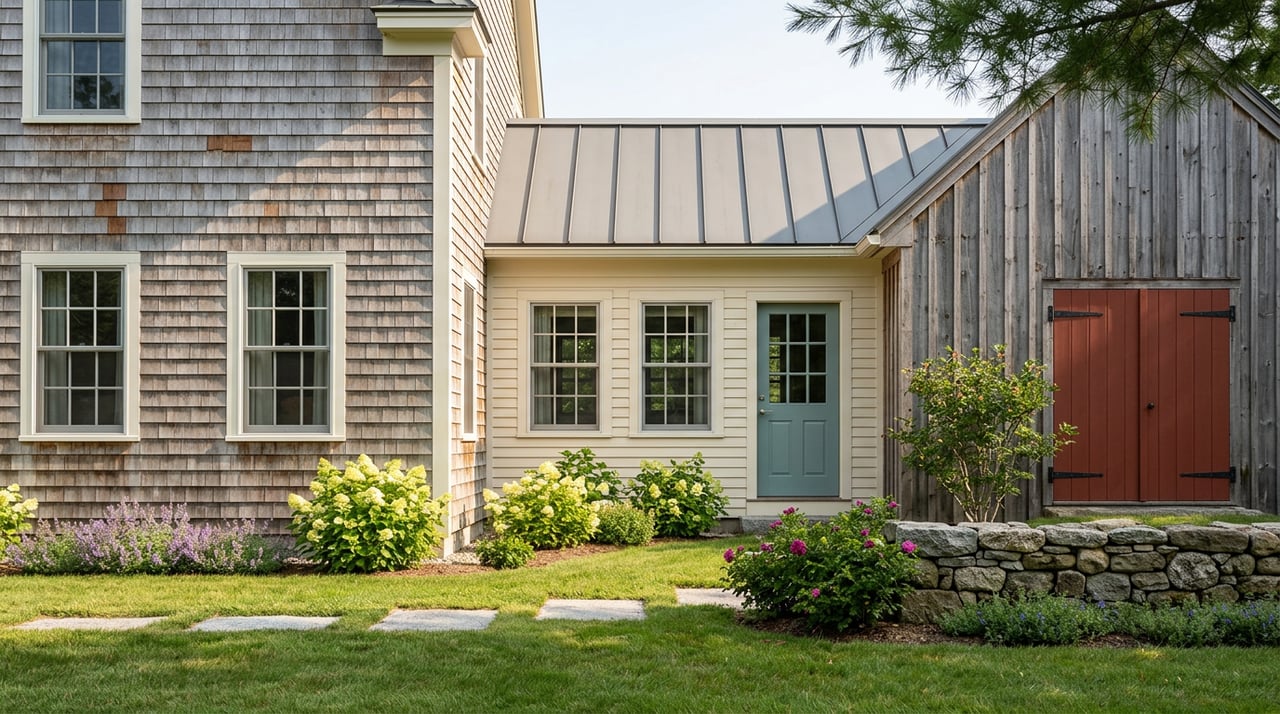
Here's where the friction shows up for buyers who already own or are about to close on an older shorefront cottage. Many of Bristol's waterfront homes, especially the classic Round Pond and New Harbor cottages built decades before the ordinance existed, sit closer to the water than current setbacks allow. That makes them legally nonconforming. Nonconforming isn't a problem on its own. The problem shows up the moment someone wants to grow the structure.
State guidelines are direct about this: a structure already sited closer to the water than the required setback cannot be expanded toward the water, full stop. Growing sideways or upward is sometimes possible, but it runs into a second ceiling. A "substantial expansion," defined under Maine law as an increase of 30 percent or more in a structure's volume or floor area, triggers a requirement to meet the full current water setback, something a tightly sited cottage often cannot do without moving the whole building.
Height adds a third constraint. Maine's shoreland model ordinance caps new or expanded structures at 35 feet, the same limit written into the neighboring South Bristol shoreland ordinance. For a sloped waterfront lot in Chamberlain or along the Pemaquid River, where the buildable envelope is already squeezed by setbacks, that ceiling can rule out a second story before a buyer even gets to design questions.
None of this shows up in listing photos. It shows up in a conversation with the code enforcement officer, ideally before an offer goes in rather than after the inspection period closes.
Septic systems get less attention than additions, but they carry their own permit trigger. Bristol's shoreland zoning permit application states it plainly: replacing a septic system within the shoreland zone requires a shoreland permit unless the replacement system is not being expanded. A buyer planning to convert a two-bedroom seasonal cottage into a four-bedroom year-round home, and upsizing the septic field to match, needs to build that permit timeline into the purchase, not discover it after the closing date is already set.
The same application asks whether the property sits in a Shoreland Flood Zone, which requires a certificate of elevation, and whether a subsurface wastewater permit signed by the local Plumbing Inspector already exists for the lot. These aren't formalities. They're the paperwork that determines whether a buyer's renovation timeline is measured in weeks or in a full permitting season.
Bristol's own town ordinances page lists the villages it governs directly: Pemaquid, New Harbor, Chamberlain, and Round Pond. Each has a different character, and that character maps loosely onto both price and zoning friction.
South Bristol, despite sharing the peninsula and a name that invites confusion, is a separate municipality with its own shoreland ordinance and its own permit process. Anyone comparing a Bristol listing to a South Bristol listing is comparing two different regulatory regimes, not two neighborhoods under one rulebook.
Can a seasonal camp be converted to a year-round home? Generally yes, but it typically requires a seasonal conversion permit tied to confirming the septic system can handle year-round use, not just summer occupancy.
If a nonconforming structure burns down or is destroyed, can it be rebuilt in the same footprint? Often yes, within limits set by the specific ordinance, but the details depend on how much of the structure's value was lost and what the local board determines. This is a conversation for the code enforcement officer, not an assumption to build a renovation budget around.
Does Bristol's ordinance apply to South Bristol properties? No. They are separate towns with separate ordinances, even though both sit on the same peninsula and share a name.
The lesson isn't that shoreland zoning makes Bristol waterfront property a bad investment. It's that the sale price and the zoning district are two separate pieces of information, and a buyer who only looks at one is working with half the picture. A property priced below the village median might carry generous, fully conforming setbacks and room to grow. One priced above it might already be maxed out under current rules, no matter what a future owner hopes to add.
If you're weighing a waterfront purchase anywhere on the Pemaquid Peninsula, from Round Pond to Chamberlain, the smartest first move is pulling the shoreland zoning map and the property's permit history before writing an offer, not after the inspection contingency expires. Marsha DeCosta has spent years walking Midcoast buyers through exactly this kind of due diligence, from reading a town's shoreland district map to lining up the right questions for a code enforcement officer. If you're ready to see what a specific Bristol property is actually worth, and what it can legally become, request a free home valuation and start the conversation with the facts in hand.
Stay up to date on the latest real estate trends.


With a trusted network of industry experts—including photographers, stagers, lenders, inspectors, and title professionals—Marsha ensures every transaction is handled with precision and care from start to finish. Whether you’re buying your first home, searching for a coastal retreat, or ready to list your property, Marsha DeCosta is a REALTOR® who makes every client’s real estate experience seamless, informed, and rewarding.
Marsha DeCosta
[email protected]
(207) 380-9970
License #BR925618
152 Main Street Wiscasset ME 04578